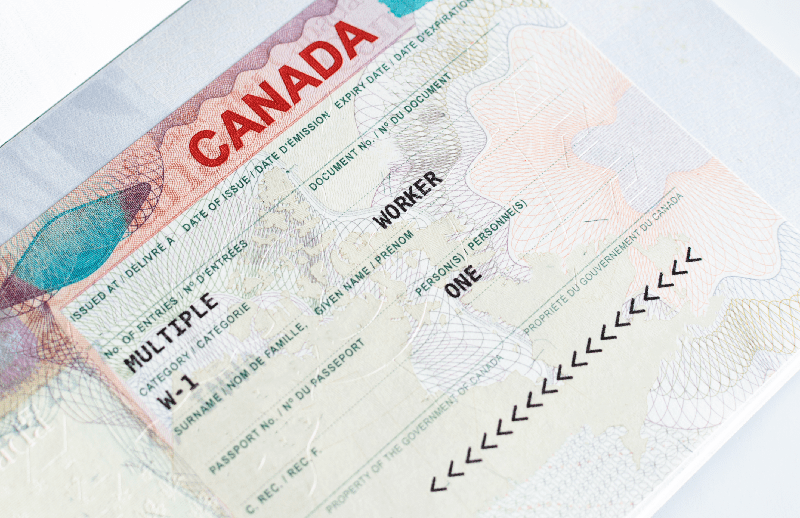
A Canada Work Visa is an official authorization issued by the government of Canada that allows foreign nationals to work in the country on a temporary or long-term basis. This type of visa is not only one of the most popular legal pathways to enter Canada, but for many applicants, it also serves as a bridge to obtaining permanent residency.
Individuals who successfully obtain a Canada Work Visa can work for reputable international companies and organizations, gaining valuable experience in one of the world’s most advanced and safest countries. This international work experience plays a significant role in enhancing professional skills, increasing future job opportunities, and creating a pathway toward permanent residency.
Due to labor shortages in many sectors, the Canadian government issues thousands of work permits each year and actively welcomes skilled professionals, tradespeople, and technical workers. Various programs—such as the Temporary Work Permit, employer-sponsored work visas (Job Offer), and immigration pathways through Express Entry—provide applicants with the opportunity to choose the most suitable route based on their qualifications and circumstances.
Types of Work Permits in Canada
Canada’s work permits are generally divided into two main categories: the Open Work Permit and the Employer-Specific Work Permit. Each of these permit types comes with its own conditions, benefits, and limitations, and choosing the right one depends on the applicant’s goals, work experience, and immigration status.
Open Work Permit
An Open Work Permit allows the holder to work for any employer in Canada, except in specific cases where the employer is listed as non-compliant or ineligible by the government. This type of work permit does not require a job offer or a Labour Market Impact Assessment (LMIA).
Open Work Permits are typically issued to the following groups:
Spouses or common-law partners of international students or foreign workers in Canada
Graduates applying through the Post-Graduation Work Permit (PGWP) program
Certain refugee claimants or individuals under specific temporary residence programs
Closed Work Permit
An Employer-Specific Work Permit, as the name suggests, allows the applicant to work only for a specific employer and in a defined position. For this type of work permit, a valid job offer is required, and in most cases, a positive Labour Market Impact Assessment (LMIA) must also be obtained.
Comparison of Canada Work Permit Types
Feature
Open Work Permit
Closed Work Permit
Employer Flexibility
Can work for any employer
Restricted to one specific employer
Job Offer Requirement
Not required
Required
LMIA Requirement
Not required
Usually required
Work Location
Flexible (varies by job)
Fixed (as per job offer)
Freedom to Change Jobs
Yes
No (requires new permit)
Application Complexity
Generally simpler
More complex due to employer involvement
Why Is a Canada Work Visa Important?
A Canada Work Visa is more than just a temporary authorization to work—it is a strategic opportunity for individuals who aim to build an international career and potentially settle in Canada. By gaining Canadian work experience, applicants not only strengthen their professional profile but also position themselves for long-term immigration pathways and better career prospects in a competitive global market.
Pathway to Permanent Residency
Valuable Canadian Work Experience
Access to Better Job Opportunities
Family Advantages
Main Work Permit Programs
The Government of Canada issues work permits through several key immigration streams, each designed for specific categories of applicants. The most important programs include the Temporary Foreign Worker Program (TFWP), the International Mobility Program (IMP), Intra-Company Transfers (ICT), and the Post-Graduation Work Permit (PGWP). Below, we will explore each of these programs in more detail.
TFWP
The Temporary Foreign Worker Program (TFWP) allows Canadian employers to hire foreign workers for positions that cannot be filled by the local labour force. This program requires employers to obtain a positive Labour Market Impact Assessment (LMIA) before hiring a foreign worker.
IMP
The International Mobility Program (IMP) allows foreign nationals to work in Canada without the need for a Labour Market Impact Assessment (LMIA), when their employment is considered to provide broader cultural, economic, or political benefits to Canada. This program includes permits such as intra-company transfers and spousal work permits.
ICT
An Intra-Company Transfer (ICT) work permit allows managers, executives, or specialized knowledge employees of multinational companies to be transferred to a Canadian branch, subsidiary, or affiliate. This permit is issued under the International Mobility Program (IMP) and does not require an LMIA.
PGWP
The Post-Graduation Work Permit (PGWP) allows international students who have graduated from eligible Canadian designated learning institutions to work in Canada for up to three years. This work experience is considered a significant advantage when applying for permanent residency.
Work Permit Programs At a Glance
Program
LMIA
Employer Restriction
Main Purpose
TFWP
Yes
Yes
Fill labour shortages in Canada
IMP
No
Usually employer-specific (varies)
Broader economic, cultural, or strategic benefits
ICT
No
Yes
Transfer employees within multinational companies
PGWP
No
No
Allow graduates to gain Canadian work experience
Benefits of a Canadian Work Visa
Legal entry into the Canadian job market
Gain Canadian work experience
Pathway to permanent residency
Family accompaniment in eligible cases
Access to provincial healthcare services
Why Work With Us?
With experience in hundreds of successful Visitor Visa cases, we help you build a strong, well-prepared application that improves your chances of approval and reduces refusal risks.
Start Your Application Today
FAQ
What is a Canada Visitor Visa?
A Canada Visitor Visa, also known as a Temporary Resident Visa (TRV), is an official document that allows foreign nationals to enter Canada for a temporary stay, such as tourism, visiting family, or business purposes.
How long can I stay in Canada with a Visitor Visa?
Most visitors can stay in Canada for up to 6 months per entry. However, the final duration is determined by a border officer at the time of entry.
How long does it take to process a Canada Visitor Visa?
Processing times vary depending on your country of residence and application complexity. It may take anywhere from a few weeks to several months.
Can I extend my stay in Canada as a visitor?
Yes, you can apply for a visitor record to extend your stay before your current status expires. Approval is not guaranteed and depends on your situation.
Is an invitation letter required for a Canada Visitor Visa?
No, it is not mandatory. However, if you are visiting family or friends, an invitation letter can strengthen your application.
Can I work in Canada with a Visitor Visa?
No, a Visitor Visa does not allow you to work in Canada. You need a valid work permit to be legally employed.
Can I convert my Visitor Visa to a work permit or study permit?
In some cases, it may be possible to apply for a different status from within Canada, depending on eligibility and immigration policies.